Speech Sound Disorder Therapy
Speech therapy that helps children develop clearer speech so they can be understood at home, at school, and everywhere in between.
Speech sound disorders can apply to three areas: Articulation, Phonological Processes, and Motor Speech.
Our speech-language pathologists determine which approach best fits your child’s needs, which may include:
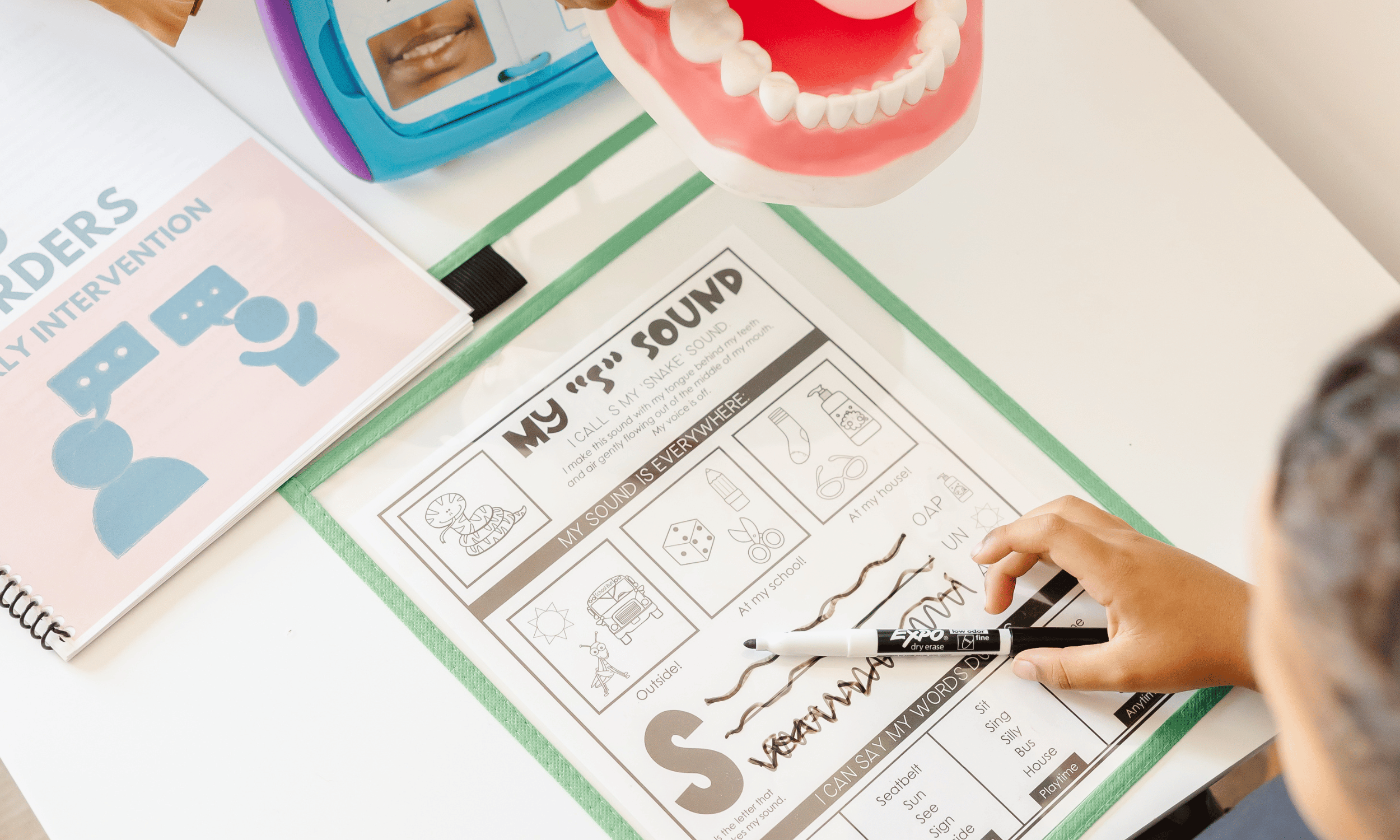
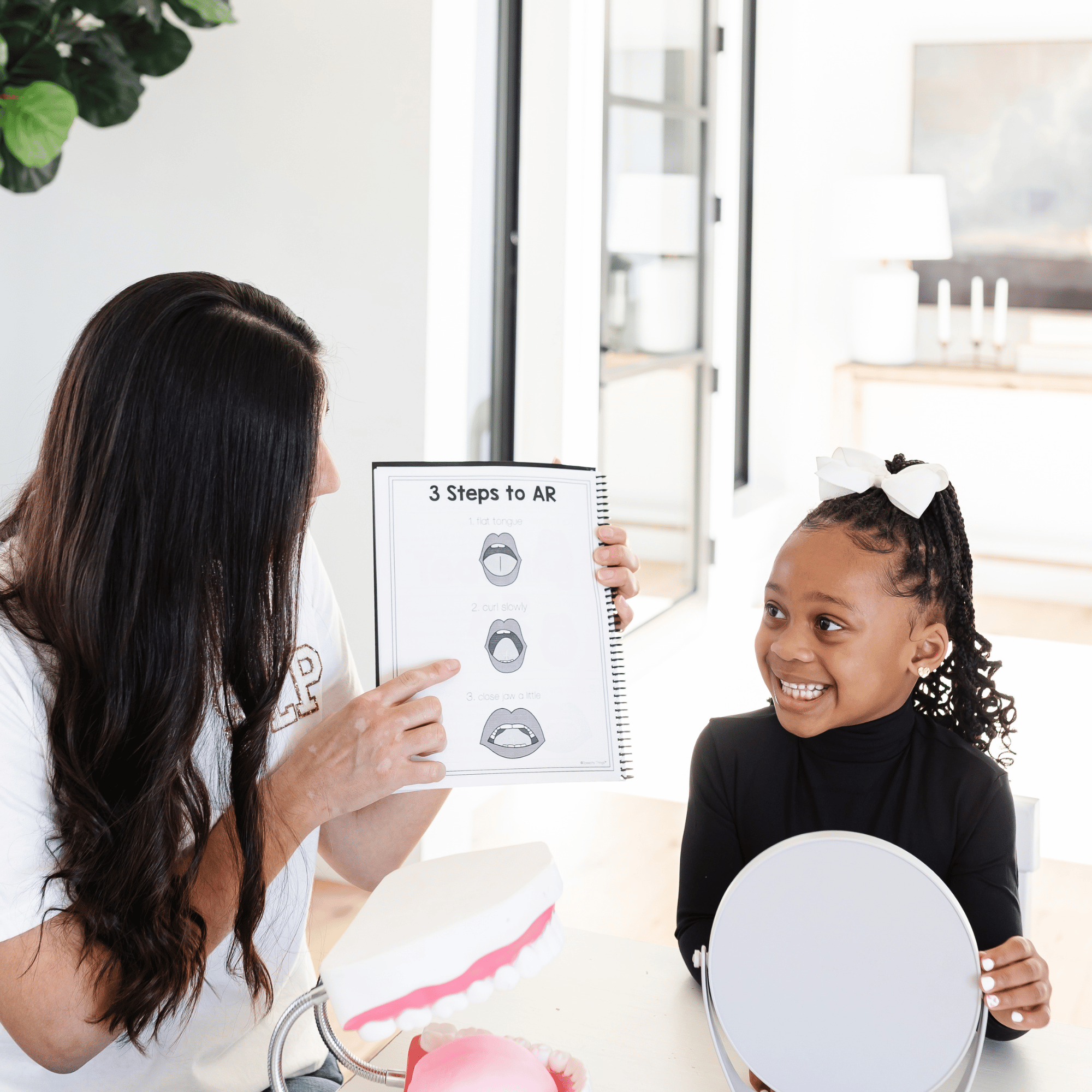
Articulation Therapy: Helps children with correct placement of oral articulators (tongue, lips, teeth) to produce speech sounds.
Phonological Therapy: Addresses patterns of sound errors that can make a child’s speech hard to understand.
Motor Speech Therapy: Supports children who have difficulty planning and coordinating the movements needed for speech.
If you have questions about these areas, connect with a Canopy speech therapist. We can review your concerns and help determine next steps.
What Speech Therapy Looks Like at Canopy
We use activities your child enjoys to learn new sounds, become more intelligible, and express wants and needs.
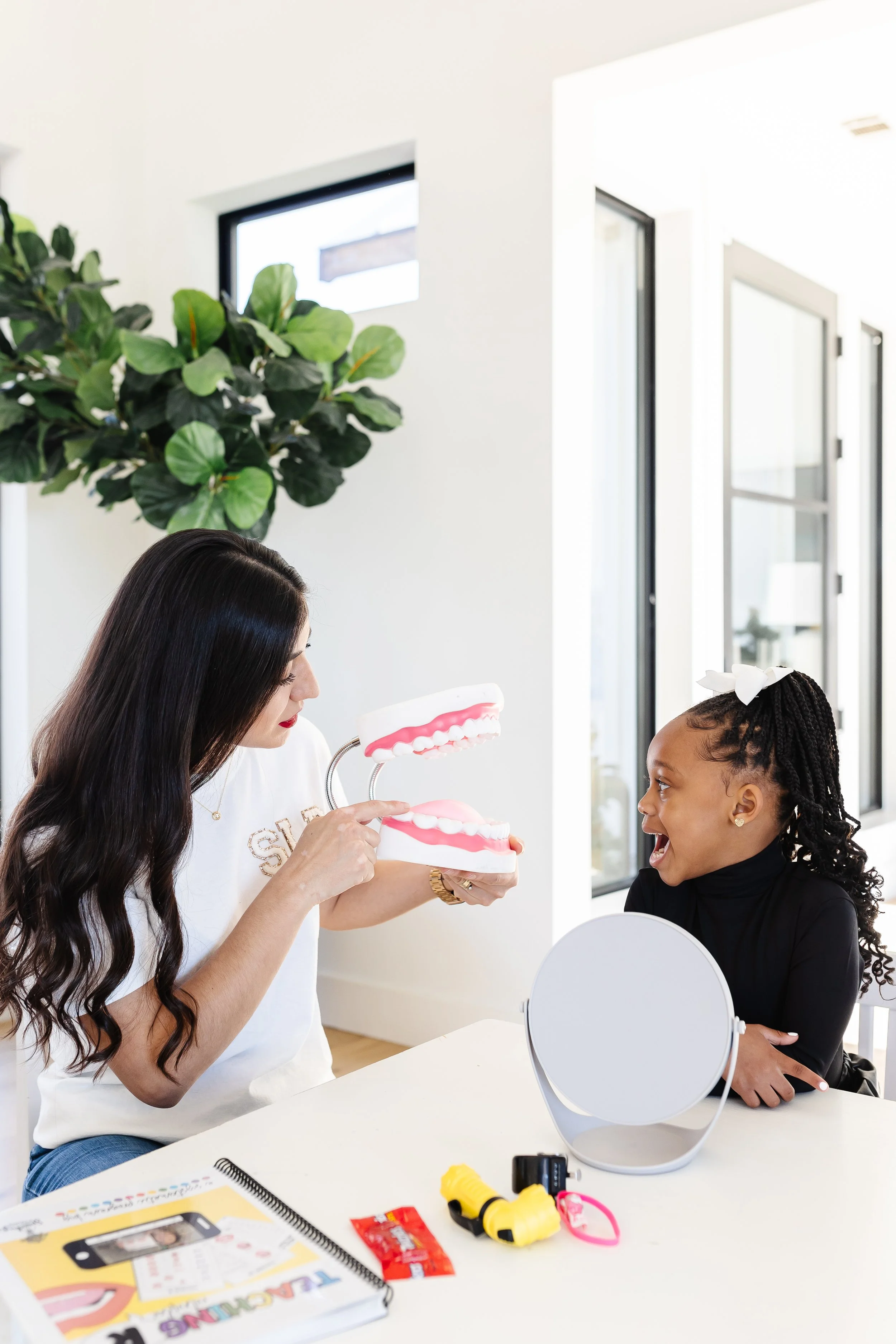
Our treatment sessions are interactive, play-based, and practical.
❋ Sessions target intelligibility and speech sound production.
❋ We use evidence-based treatment techniques to build meaningful skills.
❋ Family coaching is included at no extra cost.
❋ We provide activities to help your child practice their skills at home.
Sessions May Include Things Like…
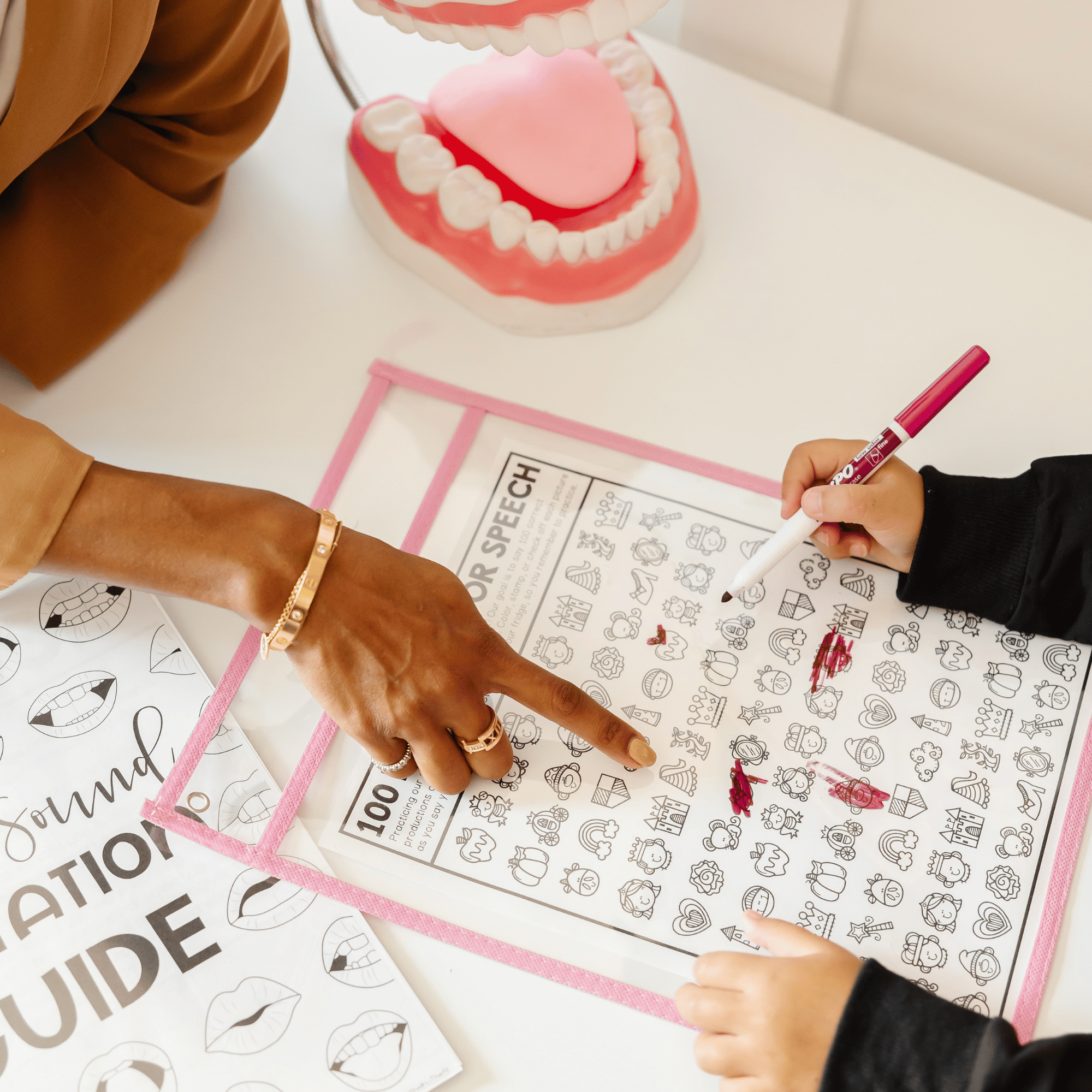
Incorporating target sounds into games.
Rhyming, syllable awareness & alliteration.
Matching sounds to printed letter.
What Progress Looks Like
You will know your child is making progress when people outside your home, such as grandparents, extended family, and teachers, begin commenting on how much easier your child is to understand.
❋ Your child can communicate, knowing others will understand them, without repeating themselves or relying on you to explain.
❋ Less guessing and more clarity when your child communicates their needs and wants.
Understanding
independence
connection
participation
confidence
belonging
How Therapy Helps Children Use Speech Sounds in Conversation
Motor learning principles guide a child from learning a sound in isolation to using it correctly in everyday conversation.
01.
Complexity is increased. This may look like incorporating the sound into multisyllabic words, short phrases, and sentences.
02.
Practice moves from structured to random. Instead of saying one word ten times to practice a sound, a variety of words are presented to generalize that sound.
03.
Practice becomes more variable. This may look like producing words with different intonation or voices.
04.
Feedback becomes less frequent and less specific, so children can begin to recognize their own errors.
What Our Therapists Do Differently
We start with situations where your child can produce a sound correctly, then build on those successes to help them use it more consistently.
Build From Strengths
We celebrate accomplishments and create opportunities for children to experience them, helping them stay motivated.
Turn Milestones into Victories
We use games, movement breaks, and activities your child enjoys to keep them actively engaged for stronger progress.
Make It Fun
Connect With a Canopy Speech-Language Pathologist
Whether you're ready to start therapy or still have questions, we're here to help you figure out what comes next.
Our complimentary 15-minute phone consultation gives you an opportunity to:
Share what you're seeing and ask questions.
Get practical strategies you can use at home.
Get an honest recommendation about whether an evaluation or therapy is the right next step.
What Parents Ask Us About Speech Sound Disorders
Canopy owner and speech-language pathologist, Jack Anger, MS, CCC-SLP, shares answers to some of the most common questions we hear from parents.
-
There are many different signs of a speech sound disorder. One of the most evident signs is reduced intelligibility. Other signs may include delayed first words, difficulty coordinating movements to produce sounds, substituting sounds, dropping sounds from words, or unusual rhythm (prosody).
-
There is a possibility your child will grow out of it, however, it is not common. Further, if your child does grow out of it, it will likely come after they have experienced prolonged frustration and discontent from not being understood. Early intervention results in faster outcomes and less frustration. The best time to start therapy is when your child is young. The second best time to start is now.
-
Pediatricians are be knowledgeable about child development but are not always kept up to date on new research and trends in speech and language development. Further, how your child communicates at the doctor’s office is likely much different from how they communicate in everyday settings.
If you have even the slightest concern, we recommend a 15-minute consultation with one of our speech-language pathologists. We can help you determine next steps and, if an evaluation isn’t needed, provide guidance and simple activities to practice speech sounds at home.
-
When schools evaluate children, they determine whether any concerns are impacting a child’s school performance. Sometimes children do not qualify for school services even if they have a speech sound disorder because the disorder is not impacting their educational performance. However, their speech sound disorder may significantly be impacting other areas of their life.
Even if your child does not qualify for school services, an outside speech and language evaluation may be warranted.
-
Speech sound disorders often co-occur with language delays. When a child is behind on their language milestones, it can impact the development of their speech sounds. While this is not consistent with every child, the likelihood of speech sound disorders increases when a language delay is present.
-
Difficulties with articulation are due to errors in the motor movements to produce sounds. An example of an articulation error is a lisp while producing /s/. Phonological disorders are incorrect speech patterns due to errors with the rules of the sound system and the contrasting of sounds. An example of a phonological process is consistently substituting /w/ for /r/ (i.e., “wed” for “red”).